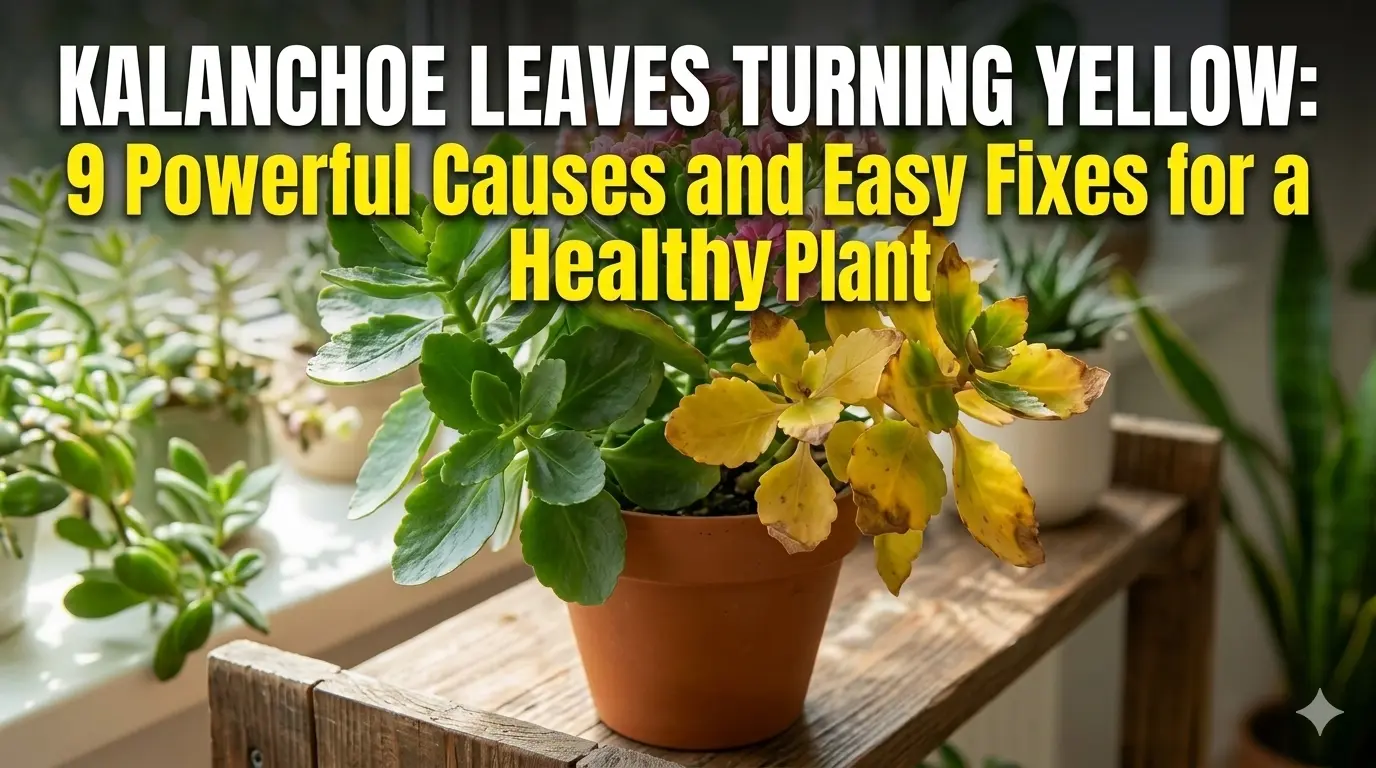
Kalanchoe Leaves Turning Yellow: 9 Powerful Causes and Easy Fixes for a Healthy Plant
Introduction
Noticing kalanchoe leaves turning yellow can be worrying for any plant owner. Kalanchoe plants are usually easy-care succulents known for their thick leaves and colorful blooms, so yellowing foliage often signals that something isn’t quite right.
If you’re wondering why are my kalanchoe leaves yellow, the answer usually lies in watering habits, lighting conditions, soil quality, or environmental stress. Fortunately, most causes of yellow leaves on kalanchoe plant are easy to fix once you identify the problem.
In this guide, you’ll learn the most common kalanchoe plant problems, including kalanchoe overwatering symptoms, nutrient issues, pests, and poor drainage. We’ll also provide clear step-by-step solutions and expert tips so you can restore your plant to vibrant health.
Common Reasons Kalanchoe Leaves Turn Yellow
Several factors can lead to kalanchoe leaves turning yellow. Identifying the correct cause is essential before attempting a fix.
The most common causes include:
- Overwatering
- Underwatering
- Poor soil drainage
- Lack of sunlight
- Nutrient deficiencies
- Pest infestations
Let’s explore each issue in detail so you can diagnose the problem accurately.
Overwatering
Overwatering is the most common reason for yellow leaves on kalanchoe plant.
Kalanchoe plants are succulents, meaning they store water in their leaves. Too much moisture can overwhelm the roots and cause damage.
Signs of Overwatering
Typical kalanchoe overwatering symptoms include:
- Yellow, soft leaves
- Mushy stems
- Leaves falling off easily
- Wet or soggy soil
- Root rot smell
When the roots sit in water for too long, they cannot absorb oxygen properly. This stress causes leaves to turn yellow and eventually drop.
Why Overwatering Happens
Common causes include:
- Watering too frequently
- Pots without drainage holes
- Heavy soil that retains moisture
Reducing watering is often the first step in the kalanchoe yellow leaves fix.
Underwatering
Although less common, underwatering can also cause kalanchoe leaves turning yellow.
When the plant lacks water for extended periods, it begins to sacrifice older leaves to conserve energy.
Signs of Underwatering
Symptoms may include:
- Yellow or dry lower leaves
- Wrinkled foliage
- Crispy leaf edges
- Dry soil pulling away from the pot
Unlike overwatering, the leaves usually feel dry rather than soft.
How Underwatering Happens
This issue often occurs when:
- Plants are forgotten during watering schedules
- Soil drains too quickly
- Indoor humidity is extremely low
Consistent watering practices help prevent this problem.
Poor Drainage and Soil Conditions
Even if you water correctly, poor soil drainage can still cause kalanchoe plant problems.
Succulents require soil that drains quickly.
Signs of Poor Drainage
- Yellowing leaves
- Slow growth
- Persistent damp soil
- Root rot
If your plant sits in dense or compacted soil, the roots stay wet too long.
Best Soil for Kalanchoe
Ideal soil mixes contain:
These materials improve aeration and prevent water buildup.
Lack of Sunlight
Kalanchoe plants thrive in bright environments. Insufficient light can trigger yellow leaves on kalanchoe plant.
Light Requirements
Most kalanchoe plants need:
4–6 hours of bright sunlight daily
Signs of Low Light
Common symptoms include:
- Yellow leaves
- Leggy stems
- Pale foliage
- Reduced flowering
Plants placed far from windows often struggle to maintain healthy growth.
A south-facing or east-facing window usually provides ideal lighting conditions.
Nutrient Deficiencies
While kalanchoe plants don’t require heavy feeding, nutrient imbalances can still cause kalanchoe leaves turning yellow.
Common Nutrient Issues
Deficiencies often involve:
- Nitrogen
- Magnesium
- Iron
Symptoms
You may notice:
- Yellowing between leaf veins
- Slow growth
- Small leaves
Fertilizer Tips
Apply a balanced fertilizer such as:
10-10-10 or 20-20-20
Use it lightly during the growing season.
Overfertilizing can also harm the plant, so moderation is important.
Pest Infestations
Sometimes kalanchoe plant problems occur because of pests feeding on the plant.
Common Kalanchoe Pests
The most frequent pests include:
- Aphids
- Mealybugs
- Spider mites
- Scale insects
Signs of Pest Damage
Look for:
- Yellow leaves
- Sticky residue on leaves
- Tiny insects on stems
- White cotton-like clusters
Pests weaken the plant by sucking sap from the leaves.
Treatment Options
You can treat infestations using:
- Neem oil spray
- Insecticidal soap
- Gentle washing with water
Regular inspections help catch pests early.
How to Fix Yellow Leaves on Kalanchoe
If you notice kalanchoe leaves turning yellow, follow these steps to restore plant health.
Step 1: Check Soil Moisture
Insert your finger into the soil about 2 inches deep.
- If soil feels wet → reduce watering
- If soil is dry → water thoroughly
Allow soil to dry between watering sessions.
Step 2: Improve Drainage
Ensure your plant pot has drainage holes.
If the soil retains too much water:
- Repot the plant
- Use succulent or cactus soil
- Add perlite for better aeration
This step is essential for a long-term kalanchoe yellow leaves fix.
Step 3: Adjust Lighting
Move your plant to a brighter location.
Best placement options include:
- Near a sunny window
- Bright indoor rooms
- Sheltered outdoor patios
Avoid harsh midday sun if the plant has been in low light.
Step 4: Inspect for Pests
Check:
- Leaf undersides
- Stem joints
- Soil surface
Remove pests manually or apply neem oil if necessary.
Step 5: Trim Damaged Leaves
Remove severely yellow or dying leaves using clean scissors.
Pruning helps the plant redirect energy toward healthy growth.
Step 6: Review Fertilization
If the plant hasn’t been fed for months, apply a diluted balanced fertilizer.
Fertilize only during:
- Spring
- Summer
Avoid feeding during winter dormancy.
Troubleshooting Table: Problem, Cause, Solution
| Problem | Cause | Solution |
|---|---|---|
| Yellow soft leaves | Overwatering | Reduce watering and improve drainage |
| Yellow dry leaves | Underwatering | Water deeply but less frequently |
| Yellow leaves with slow growth | Poor soil drainage | Repot using succulent soil |
| Pale yellow leaves | Lack of sunlight | Move plant to brighter location |
| Yellow leaves with spots | Pest infestation | Use neem oil or insecticidal soap |
| Yellow leaves with weak growth | Nutrient deficiency | Apply balanced fertilizer |
This quick table can help diagnose why are my kalanchoe leaves yellow at a glance.
Prevention Tips for Healthy Kalanchoe Plants
Preventing kalanchoe leaves turning yellow is easier than fixing the issue later.
Follow these simple plant care tips.
Water Properly
Water only when soil is dry.
Typical schedule:
- Every 2–3 weeks indoors
Use Well-Draining Soil
Choose cactus or succulent soil mixes to prevent water buildup.
Provide Enough Sunlight
Place plants in bright areas with several hours of indirect sunlight daily.
Check Plants Regularly
Inspect leaves weekly for:
- Pests
- Yellowing
- Soft stems
Early detection prevents larger problems.
Avoid Overfertilizing
Feed lightly during the growing season only.
Too much fertilizer can damage roots.
Frequently Asked Questions
1. Why are my kalanchoe leaves turning yellow and falling off?
This usually indicates overwatering. Wet soil suffocates the roots and causes leaves to yellow and drop.
2. Should I remove yellow leaves from my kalanchoe?
Yes. Removing yellow leaves helps the plant focus energy on healthy growth.
3. How often should I water kalanchoe plants?
Most indoor kalanchoe plants need watering every 2–3 weeks, depending on soil dryness.
4. Can yellow leaves turn green again?
No. Once a leaf turns yellow, it will not recover. However, correcting the issue will allow new healthy leaves to grow.
5. Do kalanchoe plants need direct sunlight?
They prefer bright indirect sunlight with a few hours of gentle direct light daily.
Conclusion
Seeing kalanchoe leaves turning yellow can be frustrating, but it is usually a sign of a correctable care issue. The most common causes include overwatering, poor drainage, lack of sunlight, nutrient deficiencies, and pests.
By identifying the underlying problem and applying the right kalanchoe yellow leaves fix, you can quickly restore your plant’s health. Simple adjustments like improving drainage, adjusting watering schedules, and providing better light can make a dramatic difference.
With proper care and regular monitoring, your kalanchoe plant will return to producing strong green leaves and vibrant flowers, remaining a beautiful addition to your indoor garden for years to come.