Soil Mites vs Fungus Gnats: How to Tell the Difference (Before Treating Your Plant)
If you notice tiny bugs moving in your houseplant soil, your first instinct is probably to get rid of them immediately. But before you do, there’s one crucial question you need to answer:
👉 Are you dealing with soil mites or fungus gnats?
These two are often confused — yet treating the wrong one can actually harm your plant instead of helping it. In this guide, you’ll learn the key differences between soil mites and fungus gnats, how to identify them correctly, and what action (if any) you should take.
Why Soil Mites and Fungus Gnats Are Often Confused
Both soil mites and fungus gnats:
- Appear in moist potting soil
- Are commonly found in indoor plants
- Thrive in overwatered conditions
- Are small and hard to identify at first glance
Because of this, many plant owners assume any bug in soil is a pest — which is not always true.
👉 If you want a full explanation of what soil mites are and what they mean, you can read our complete guide on soil mites and healthy soil.
What Are Soil Mites? (Quick Recap)
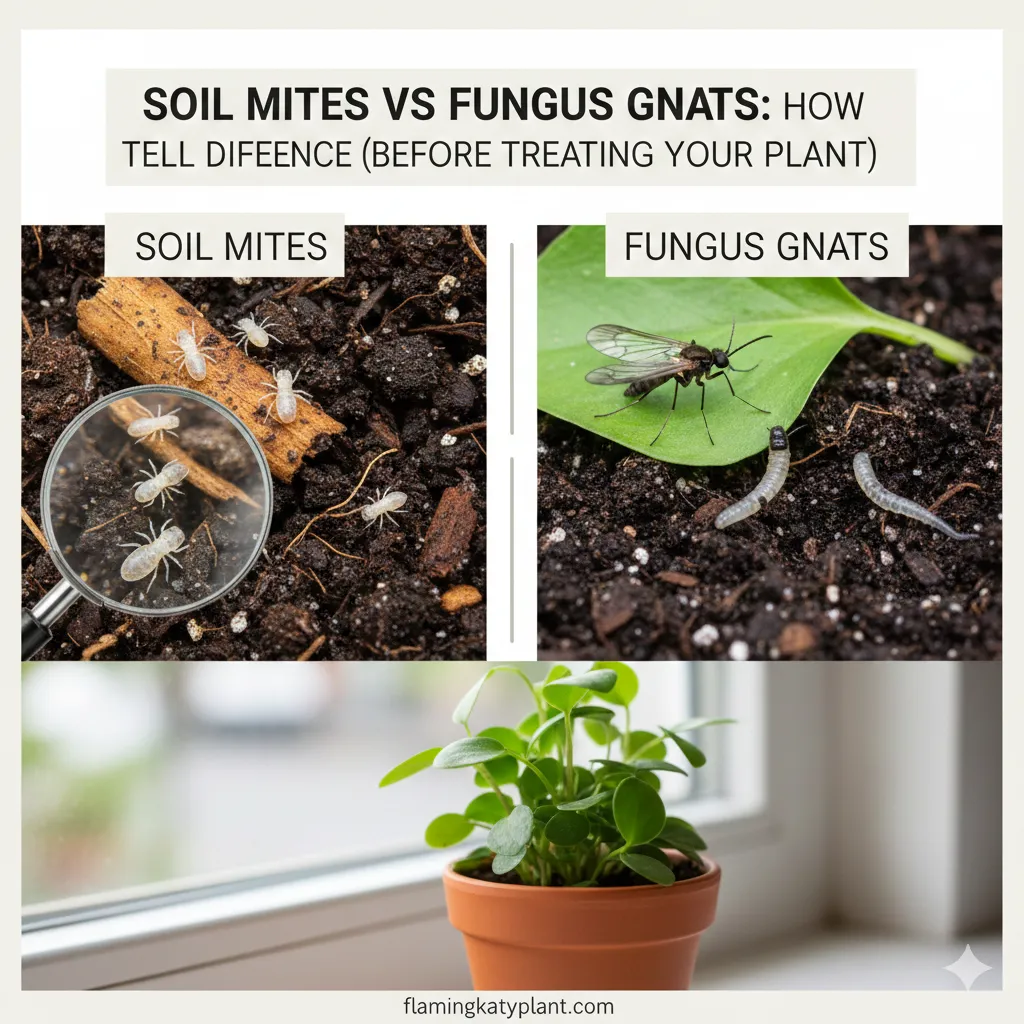
Soil mites are tiny, soil-dwelling organisms that feed on:
- Decaying organic matter
- Dead roots
- Fungi and microorganisms
They are a natural part of living soil and are usually harmless to healthy houseplants.
🔹 Key traits:
- Do not fly
- Move quickly across the soil surface
- Usually white, beige, or light brown
- Stay mostly in the soil
What Are Fungus Gnats?
Fungus gnats are small flying insects that lay their eggs in moist soil. While adult gnats are mostly annoying, their larvae live in the soil and feed on plant roots.
🔹 Key traits:
- Adult gnats fly around plants
- Larvae live below the soil surface
- Often appear alongside overwatering
- Can weaken plants over time
Soil Mites vs Fungus Gnats: Key Differences
| Feature | Soil Mites | Fungus Gnats |
|---|---|---|
| Can fly | ❌ No | ✅ Yes |
| Harm plants | ❌ No | ✅ Yes (larvae) |
| Live mostly in soil | ✅ Yes | ✅ Yes |
| Move fast on soil surface | ✅ Yes | ❌ No |
| Sign of healthy soil | Often | Rarely |
👉 If you see small flies hovering near your plant, you are almost certainly dealing with fungus gnats — not soil mites.
Which One Is Actually Dangerous to Your Plant?
Are Soil Mites Dangerous?
❌ No. Soil mites do not eat living plant tissue and do not damage roots.
In many cases, their presence means:
- Soil contains organic matter
- Microbial life is active
- The soil ecosystem is functioning
Are Fungus Gnats Dangerous?
⚠️ Yes — especially for young or stressed plants.
Fungus gnat larvae:
- Feed on delicate roots
- Slow plant growth
- Increase the risk of root rot
What to Do If You Have Soil Mites
In most cases, nothing at all.
However, if their numbers seem excessive:
- Let the soil dry out between waterings
- Improve drainage
- Remove decaying organic matter from the surface
👉 For a deeper explanation of when soil mites are helpful vs problematic, see our full guide on what soil mites really mean.
What to Do If You Have Fungus Gnats
If you confirm fungus gnats, action is recommended:
- Reduce watering frequency
- Allow the top layer of soil to dry
- Improve airflow around the plant
- Use sticky traps to catch adults
Avoid treating fungus gnats until you’re certain — misidentification leads to unnecessary stress on plants.
How to Identify the Right Bug (Quick Checklist)
Ask yourself:
- ❓ Do the bugs fly when disturbed? → Fungus gnats
- ❓ Do they crawl quickly on soil? → Soil mites
- ❓ Are there tiny black flies near windows? → Fungus gnats
- ❓ Is the plant otherwise healthy? → Likely soil mites
Final Thoughts: Don’t Treat Until You Identify
Not every bug in your plant soil is a threat. Soil mites and fungus gnats may look similar at first, but they play very different roles in your plant’s health.
Before reaching for treatments or pesticides:
- Observe movement
- Check for flying insects
- Evaluate soil moisture
Correct identification saves your plant — and often, saves you from unnecessary treatments.