Tiny White Bugs in Plant Soil: 7 Common Types Explained (And Which Ones Are Harmful)
Finding tiny white bugs in your plant soil can be unsettling. Are they pests? Are they damaging your plant’s roots? Or are they completely harmless?
The truth is: not all white bugs in soil are bad. Some are part of a healthy soil ecosystem, while others can seriously harm your houseplants if left untreated.
In this guide, you’ll learn the 7 most common tiny white bugs found in plant soil, how to identify each one, and which ones require action.
Why Do Tiny White Bugs Appear in Plant Soil?
Most soil-dwelling bugs appear because of:
- Moist or overwatered soil
- Organic matter in potting mix
- Warm indoor conditions
- Poor drainage or compacted soil
Before treating anything, identification is critical. Killing the wrong organism can disrupt healthy soil.
👉 If you’re unsure whether what you see are soil mites or something else, read our detailed comparison:
Soil Mites vs Fungus Gnats: How to Tell the Difference
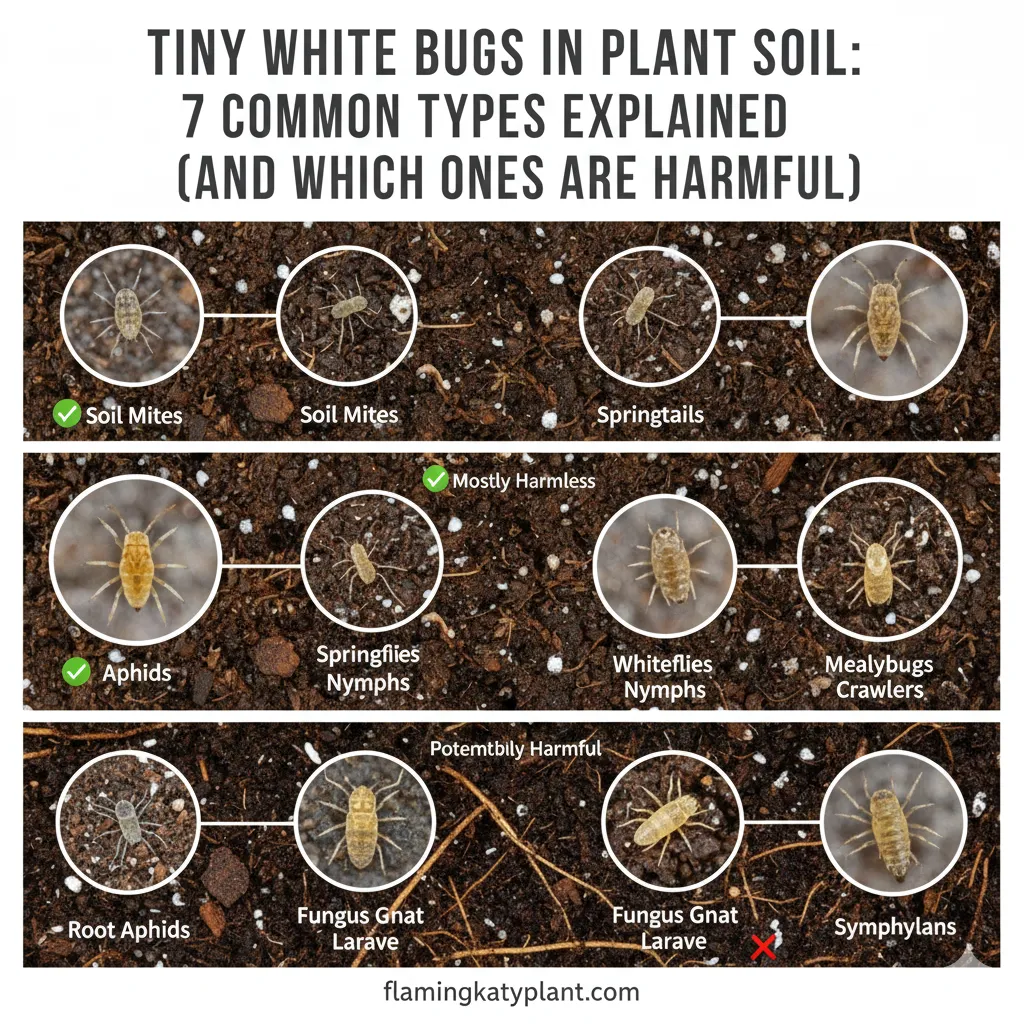
1. Soil Mites (Harmless in Most Cases)
Soil mites are one of the most common causes of tiny white bugs in soil.
What they look like:
- Tiny white, beige, or light brown
- Move quickly across the soil surface
- No wings
Are they harmful?
❌ No. Soil mites feed on decaying organic matter and fungi, not healthy plants.
📌 Often a sign of living, healthy soil.
👉 Learn more in our complete guide:
What Are Soil Mites & What Does It Mean If You Have Them?
2. Fungus Gnat Larvae (Harmful)
Although adult fungus gnats are small black flies, their larvae are tiny, white, and live in the soil.
What they look like:
- Thin, white, worm-like
- Found just below the soil surface
Are they harmful?
⚠️ Yes. Larvae feed on plant roots and can stunt growth.
Key sign:
If you see flies hovering around your plant, this is likely the culprit.
3. Springtails (Mostly Harmless)
Springtails are often mistaken for pests.
What they look like:
- Tiny white or gray
- Jump when disturbed
Are they harmful?
❌ No. They feed on mold and decaying material.
📌 High numbers usually indicate too much moisture rather than a pest problem.
4. Root Aphids (Harmful but Less Common)
Root aphids are one of the more dangerous white bugs, though less common indoors.
What they look like:
- Small, white, pear-shaped
- Often covered in waxy residue
Are they harmful?
⚠️ Yes. They suck sap from roots, weakening the plant.
Clue:
Yellowing leaves + slow growth + white bugs in soil.
5. White Worms (Pot Worms / Enchytraeids)
These worms are commonly found in organic potting soil.
What they look like:
- Very thin, white worms
- Move slowly
Are they harmful?
❌ No, in most cases.
📌 Their presence usually means overwatering.
6. Mealybug Larvae (Potentially Harmful)
Mealybugs are usually found on stems and leaves, but early-stage larvae may appear in soil.
What they look like:
- White, cottony appearance
- Slow-moving
Are they harmful?
⚠️ Yes. They feed on plant sap.
Tip:
Check leaf joints and stems carefully.
7. Nematodes (Mostly Beneficial)
Not all nematodes are bad.
What they look like:
- Microscopic white worms
- Usually invisible without magnification
Are they harmful?
✔️ Most are beneficial
⚠️ A few species can damage roots (rare in houseplants)
How to Tell Which White Bugs Are Harmful
Ask yourself:
- Do they fly? → Fungus gnats
- Do they jump? → Springtails
- Do they crawl quickly? → Soil mites
- Are plants wilting or yellowing? → Possible root pests
Correct identification saves time — and your plant.
Should You Treat Tiny White Bugs in Soil?
Not always.
Treat only if:
- The plant shows stress
- Growth is slowing
- Leaves yellow or wilt
- Bugs are identified as harmful
Often enough:
- Reduce watering
- Improve drainage
- Remove decaying matter
Avoid harsh chemicals unless absolutely necessary.
Seeing tiny white bugs in plant soil doesn’t automatically mean disaster. Many are harmless or even helpful, while only a few require intervention. Before treating, observe carefully — and identify correctly.