
Kalanchoe leaves turn soft and wrinkly for two opposite root causes: underwatering (leaves feel thin, limp, and rubbery because internal water reserves are depleted) or root rot from overwatering (leaves feel mushy, translucent, or squishy because suffocated, rotted roots cannot transport water to the foliage). To diagnose your plant immediately, check soil moisture 2 inches deep and perform the gentle leaf flex test.
Kalanchoe plants (Kalanchoe blossfeldiana, commonly known as Flaming Katy) are cherished for their thick, fleshy, emerald-green succulent foliage and vibrant clusters of long-lasting flowers. Because they belong to the Crassulaceae family, healthy Kalanchoes store substantial water reserves within their leaves, keeping them plump, rigid, and glossy.
When those once-firm succulent leaves suddenly become soft, droopy, rubbery, or covered in fine surface wrinkles, it is a clear distress signal. The paradox that confuses many indoor gardeners is that both extreme drought and deadly root rot produce nearly identical leaf symptoms. If you misdiagnose the problem and pour water onto a plant that is already suffering from root rot, you can kill your Kalanchoe within 48 hours. This comprehensive diagnostic guide will help you determine the exact cause of soft leaves and provide step-by-step instructions to revive your plant.
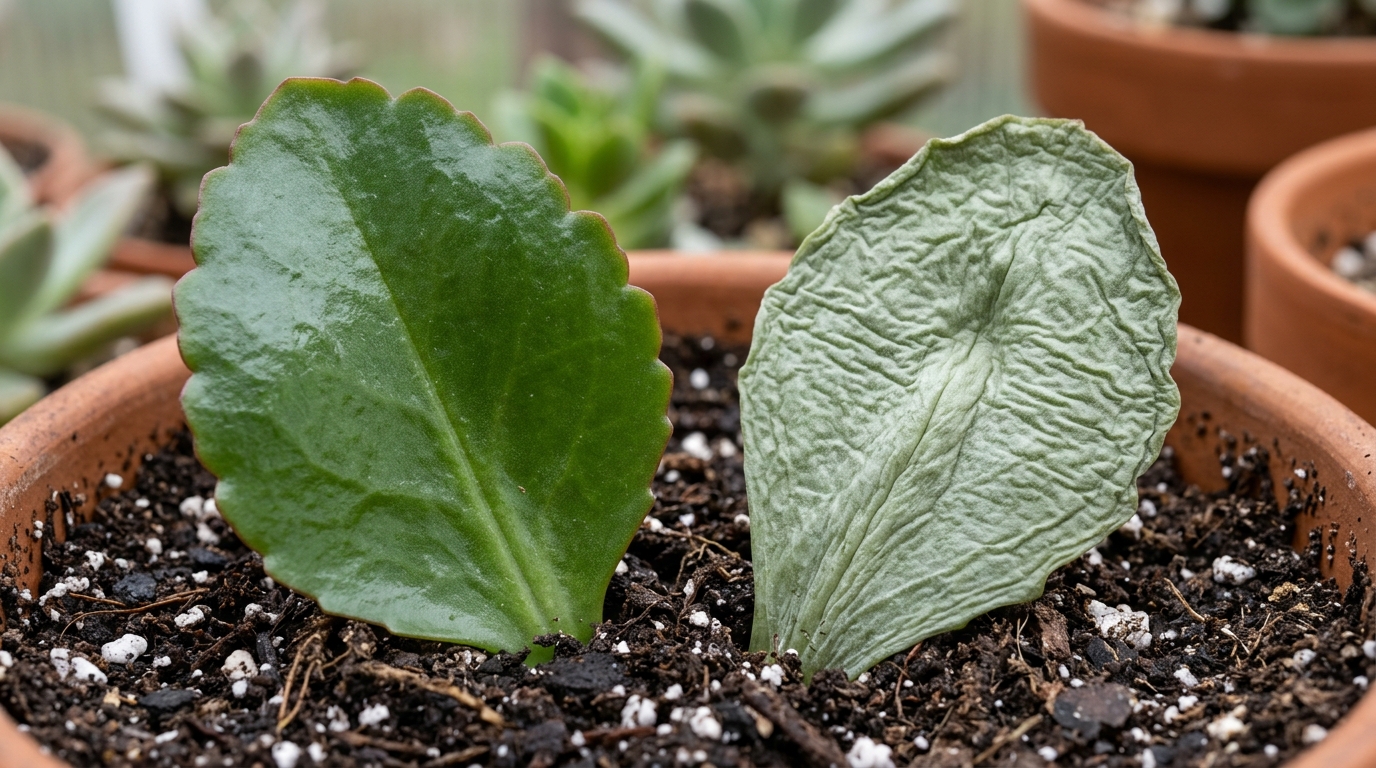
The 5-Second Leaf Flex Test: Dehydration vs. Root Rot
Before changing your watering routine, perform this simple tactile test on the lowest mature leaves of your Kalanchoe:
- Feel: The leaf is thin, limp, and bends easily like a soft leather strap without snapping.
- Appearance: Dull green color with fine, uniform longitudinal wrinkles across the surface.
- Soil: Bone dry, pulling away from the inside rim of the pot, light in weight.
- Outcome: Reversible within 12 to 24 hours after a thorough bottom-watering soak.
- Feel: The leaf feels squishy, bloated, waterlogged, or mushy like a wet sponge.
- Appearance: Pale yellow, translucent, or develops dark black patches near the leaf stem junction.
- Soil: Moist, soggy, cold to the touch, heavy, or gives off a sour, musty odor.
- Outcome: Requires immediate unpotting, root surgery, and fresh sterile soil.
Diagnostic Matrix: Soft & Wrinkly Leaf Symptoms Compared
Use this symptom checklist to pinpoint the precise issue affecting your Kalanchoe:
The 5 Main Reasons Why Kalanchoe Leaves Turn Soft and Wrinkly
1. Underwatering & Hydrophobic Peat Soil
While Kalanchoe succulents are famously drought-tolerant, they are not immortal cacti. In active growth periods and flowering cycles, they transpire water steadily. When the potting mix dries out completely, the plant drains the moisture stored in its lowest leaves to keep the upper crown and blooming flowers hydrated.
The Hydrophobic Soil Trap: Most nursery Kalanchoes are potted in peat-moss-based substrates. When peat moss dries out 100%, it becomes hydrophobic—meaning it physically repels water. When you pour water from the top, it immediately channels down the inside of the pot and exits the drainage holes without actually wetting the dense root core. Your plant remains parched despite regular watering!
2. Overwatering and Fungal Root Rot
Overwatering is the single most common killer of indoor Kalanchoes. When potting soil remains perpetually saturated, water fills all microscopic air pockets, suffocating the root system. Anaerobic conditions invite opportunistic water molds (Pythium, Phytophthora, and Fusarium) to invade the root tissues.
As the roots turn to mush and die, the plant loses its entire plumbing system. Even though the soil is soaking wet, no water can reach the foliage. The leaves starve of moisture and wrinkle up, prompting unsuspecting growers to add even more water, sealing the plant’s fate. If you notice accompanying yellowing, consult our detailed guide to Kalanchoe leaves turning yellow.
3. Rootbound Strangulation & Compressed Roots
When a Kalanchoe has occupied the same container for more than two years, its dense fibrous root system spirals tightly around the pot perimeter, forming a solid root-bound mass. In this condition, the volume of roots far exceeds the volume of soil, making it impossible for the mix to retain sufficient moisture between waterings. The leaves quickly wrinkle and droop within 24 hours of being watered.
4. Cold Temperature Shock (Below 50°F / 10°C)
Kalanchoes are native to the warm, semi-arid rocky hills of Madagascar and thrive in temperatures between 65°F and 80°F (18°C to 27°C). If placed next to a drafty winter window, air conditioning vent, or exposed to nighttime temperatures below 50°F (10°C), the succulent cell walls rupture. This causes the foliage to lose cellular turgor pressure, turning soft, limp, and rubbery within hours.
5. Fertilizer Salt Burn (Osmotic Dehydration)
Applying high-strength chemical fertilizers to dry Kalanchoe soil causes rapid salt accumulation around the root zone. Through the laws of osmosis, high soil salinity draws moisture out of the root cells back into the soil. This reverse osmotic shock causes sudden leaf softening and crisp brown leaf margins.
Step-by-Step Revival Protocols: How to Save Your Kalanchoe
Protocol A: How to Revive an Underwatered Kalanchoe (Bottom-Watering Soak)
If your soil is dry, the pot is feather-light, and leaves are rubbery, follow this deep rehydration method to overcome hydrophobic soil:
- Fill a Basin: Fill a sink, bowl, or tray with 2 to 3 inches of lukewarm, filtered or dechlorinated water.
- Submerge the Base: Place your potted Kalanchoe into the water basin. Ensure the drainage holes are submerged.
- Bottom Soak (25–35 Minutes): Allow the soil to draw water upward via capillary action. Check the topsoil surface; once it feels cool and evenly damp, remove the pot.
- Drain Completely: Let the pot drain in a sink for 20 minutes so all excess water escapes. Never leave the pot sitting in a water-filled saucer.
- Recovery Window: Within 12 to 36 hours, the succulent leaves will absorb the moisture, firming up and smoothing out their surface wrinkles.
Protocol B: How to Save a Kalanchoe from Root Rot (Emergency Surgery)
If the soil is wet and leaves are soft, mushy, or discolored, immediate root intervention is mandatory:
- Unpot and Inspect: Gently slide the plant out of its container. Rinse the root ball under lukewarm running water to wash away all contaminated soil.
- Surgically Prune Rotted Roots: Healthy roots are firm and white or tan. Rotted roots are brown/black, stringy, and pull away easily. Using sterilized shears (wiped with 70% rubbing alcohol), trim away all dead, rotted root material back to healthy tissue.
- Apply Natural Fungicide: Dust the remaining root system with ground organic cinnamon (a natural antifungal) or spray with a 3% hydrogen peroxide solution (1 part H2O2 to 4 parts water) to sterilize fungal spores. If the main stem has begun rotting, review our guide on why a Flaming Katy stem turns black.
- Repot in Gritty Succulent Mix: Repot into a clean terra cotta pot (which breathes and wicks away moisture) using a fast-draining mix composed of 50% cactus potting soil and 50% perlite or coarse pumice.
- Withhold Water for 5–7 Days: Do not water immediately! Allow trimmed root wounds to callous over in dry soil for nearly a week before giving a light drink.
Preventative Care: How to Keep Kalanchoe Leaves Firm and Plump
- The Soak-and-Dry Watering Rule: Only water when the top 50% to 75% of the potting mix is dry. Insert a wooden skewer or moisture meter into the root zone before watering.
- Choose Terra Cotta Pots: Porous unglazed clay pots allow soil to aerate from all sides, preventing soggy, oxygen-deprived root conditions.
- Provide 6+ Hours of Bright Light: Keep your plant in bright, indirect sunlight or a sunny east- or south-facing window. Adequate light drives transpiration and nutrient absorption. For complete seasonal care tips, consult our complete Flaming Katy growing guide.
- Inspect for Soil Organisms: Regularly check the topsoil for unusual activity; if you spot tiny critters, our diagnostic guides on tiny white bugs in plant soil and what soil mites mean for houseplants will help you differentiate friends from foes.