
Emergency Diagnostic Checklist
Is a black stem fatal to a Kalanchoe? If the black section is soft, squishy, and moving upward from the soil line, your plant has stem rot (Pythium or Phytophthora fungal infection) caused by waterlogged roots. The original root system and rotted stem cannot recover, but you can save the plant by performing an emergency top-cut (beheading) into clean green tissue before the rot reaches the canopy.
In This Plant Rescue Guide:
Stem Rot vs Corking: How to Tell the Difference
Before initiating emergency surgery, it is essential to determine whether your Kalanchoe’s stem darkening is a fungal pathogen or natural maturation. Many panicked indoor gardeners mistake corking for rot.
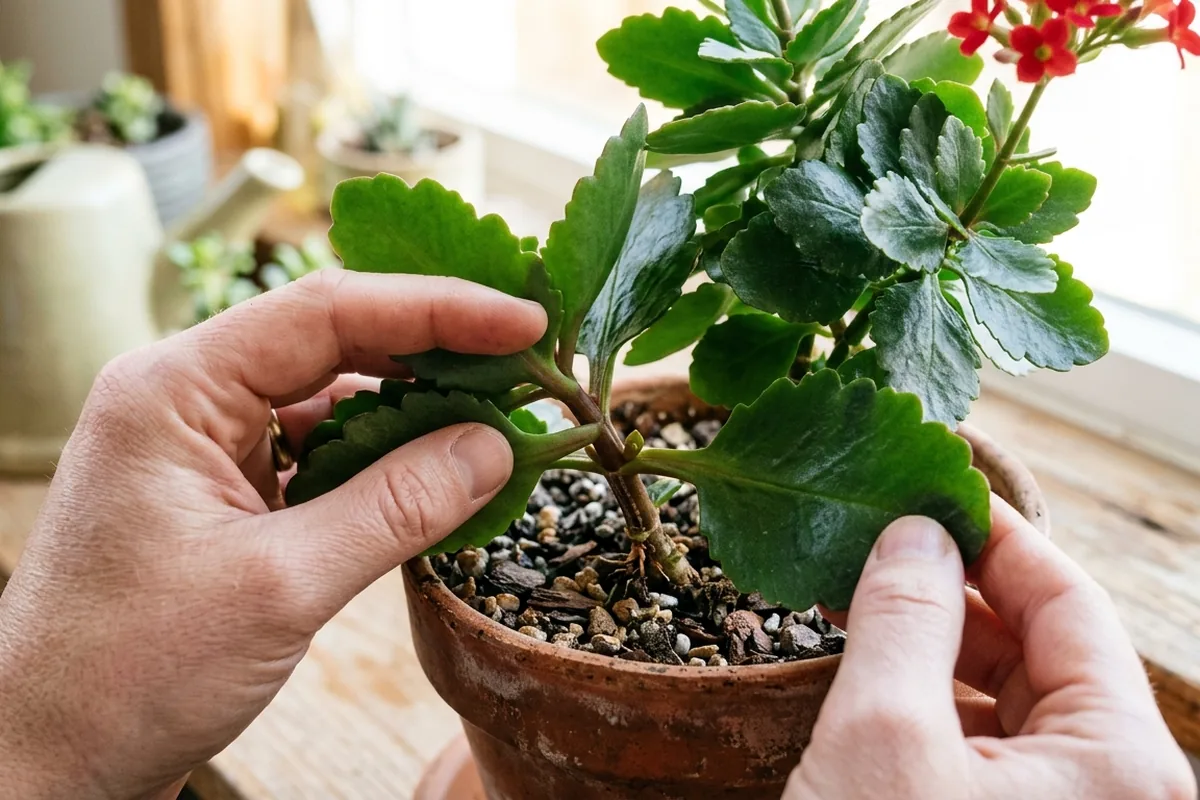
Natural Corking: As succulent stems age and bear heavy clusters of leaves, the green tissue at the base produces tough, fibrous bark to support the weight. Corked tissue looks tan, light brown, or gray-brown. Crucially, corked stems remain hard, firm, and dry to the touch.
Fungal Stem Rot: Stem rot presents as a dark brown, bruised, or jet-black discoloration that starts at the soil line and travels upwards. The stem feels mushy, slimy, or hollow under light finger pressure, and lower leaves turn translucent, yellow, and drop off at the slightest touch.
Symptoms & Texture Comparison Table
Use this diagnostic table to accurately identify what is happening to your plant’s base:
| Diagnostic Factor | Natural Corking (Harmless) | Bacterial / Fungal Stem Rot (Urgent) |
|---|---|---|
| Texture & Firmness | Rigid, firm, dry, and woody. | Squishy, hollow, wet, easily punctured. |
| Color Profile | Tan, pale beige, light grayish bark. | Deep brown, bruised purple, jet-black. |
| Odor from Soil | Clean, earthy potting mix scent. | Sour, swampy, decaying organic smell. |
| Foliage Health Above | Leaves remain plump, turgid, and green. | Leaves yellow, wrinkle, wilt, and drop rapidly. |
Step-by-Step Surgical Rescue (Beheading Protocol)
If you confirm stem rot, waiting for the soil to dry will not fix the problem; fungal pathogens travel up the plant’s vascular bundles within 48 to 72 hours. Follow these surgical rescue steps immediately:
- Sterilize a Sharp Knife: Use a craft knife or razor blade wiped down with 70% rubbing alcohol. Do not use blunt kitchen scissors that crush plant stems.
- Cut into Clean Green Flesh: Make a clean cut at least 1 to 2 inches above the uppermost black discoloration. Inspect the cross-section of the cut stem. The internal tissue must look pure, pale green and watery. If you see brown or black specks inside the vascular ring, cut another inch higher until the stem interior is pristine.
- Discard the Contaminated Root Ball: Unpot the rotted roots, seal the old soil and black stem in a plastic bag, and throw it in the trash. Never compost diseased plant material. Disinfect the pot with hot soapy water and a 10% bleach solution if you plan to reuse it.
- Callus the Cutting: Dust the freshly exposed stem wound with ground cinnamon (a natural antifungal) or sulfur powder. Place the cutting on a clean paper towel in a warm, dry room for 3 to 4 days until a firm callus seals the wound.
- Re-root in Dry Substrate: Plant the callused cutting in fresh, dry succulent mix. Do not water for the first 10 days. The cutting will draw on moisture stored in its fleshy leaves to produce brand-new root nubs.
Soil & Moisture Reset: How to Prevent Future Rot
Kalanchoes are native to the arid hillsides of Madagascar, where water drains away within minutes. Preventing recurrent root and stem decay requires two non-negotiable container rules:
- Use Gritty, Porous Soil: Standard potting soil retains excessive moisture. Blend 50% commercial succulent soil with 30% coarse perlite and 20% pumice or horticultural grit.
- Select Unlacquered Terracotta: Clay pots breathe through their porous walls, helping excess root moisture evaporate from the sides as well as the top. Always ensure your pot has an unobstructed drainage hole.
- The “Soak and Dry” Method: Never water on a fixed calendar schedule. Insert a wooden skewer or your finger 2 inches into the soil; water only when the medium is 100% dry from top to bottom.
If your plant has also been exhibiting pale or discolored leaves, read our dedicated diagnostic guide on 9 causes and easy fixes for Kalanchoe leaves turning yellow, and keep your watering dialed in with our comprehensive Kalanchoe watering guide.
Frequently Asked Questions
Can fungicide spray cure a black, mushy stem?
No. Topical fungicides cannot reverse dead, rotted plant tissue or unclog vascular channels that have already decayed. The only effective remedy is physical excision (cutting away the rotted tissue) and re-rooting the healthy top.
Why did my plant rot even though I only watered it once a week?
Watering frequency is only half the equation. If your plant is housed in dense potting peat, lacks sufficient bright sunlight, or sits in a decorative container without drainage holes, soil can stay wet for weeks even with infrequent watering.
How long does it take for a re-rooted cutting to grow roots?
In warm temperatures (68°F to 75°F / 20°C to 24°C) with bright indirect sunlight, fresh root primordia will develop from the callused stem within 2 to 3 weeks.