
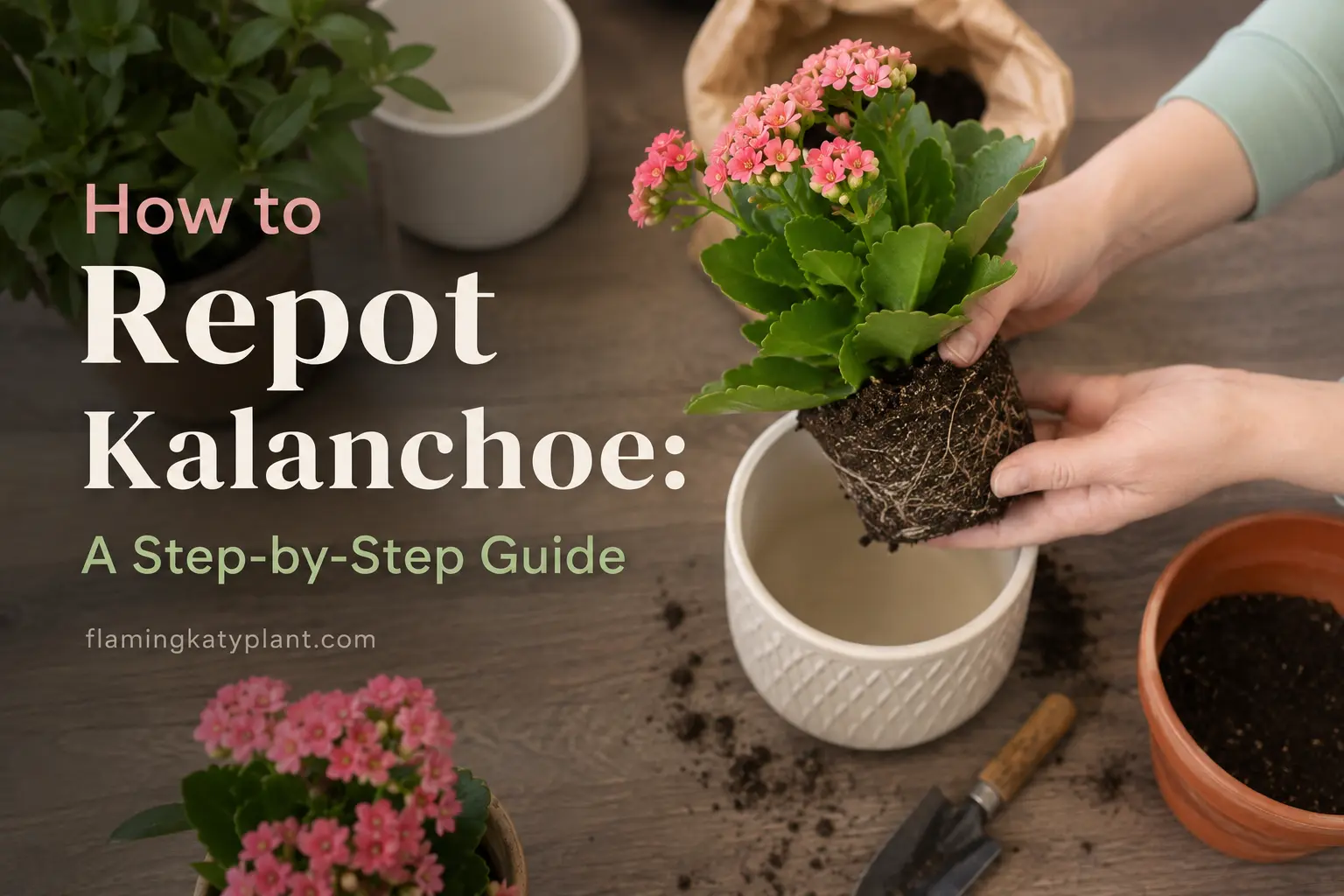
Kalanchoe blossfeldiana — the plant most of us know as Flaming Katy — is famously low-maintenance, but even the easiest succulent needs a bigger home eventually. If your plant’s roots are peeking out of the drainage holes, water is running straight through the pot, or it just hasn’t been repotted since you brought it home, it’s probably time.
The good news: repotting a Kalanchoe is a five-minute job, and doing it correctly makes a real difference in how well your plant grows and blooms afterward. Here’s exactly how to do it.
When Does Kalanchoe Need Repotting?
Kalanchoe doesn’t need frequent repotting — in fact, it actually prefers being slightly snug in its pot. Look out for these signs before you reach for a new pot:
- Roots growing out of the drainage holes or circling visibly at the soil surface
- Water runs straight through the pot without the soil absorbing it
- The plant looks top-heavy or tips over easily
- Growth has slowed or stalled, even during the growing season
- It’s been more than 12–18 months since the last repot, or since you bought it
If your Kalanchoe is currently in bloom, it’s best to wait. Repot either before flowering starts or after the blooms have faded — moving a blooming plant can cause it to drop flowers early.
What You’ll Need
- A new pot, only 1–2 inches wider in diameter than the current one (Kalanchoe doesn’t like too much extra room)
- A pot with drainage holes — this is non-negotiable for preventing root rot
- Fresh, well-draining succulent or cactus soil mix
- A trowel or your hands
- Scissors (in case you need to trim any damaged roots)
Step-by-Step: How to Repot Kalanchoe
1. Prepare the new pot
Add a shallow layer of fresh soil to the bottom of the new pot — just enough that when the plant sits on top, its base will end up at roughly the same soil depth as before.
2. Remove the plant from its old pot
Gently tip the pot sideways and ease the plant out, supporting the base of the stem as you go. If it’s stuck, run a knife around the inside edge of the pot to loosen it rather than yanking on the stem.
3. Loosen and inspect the roots
Gently tease apart the outer roots with your fingers to encourage them to grow outward in the new pot rather than continuing to circle. While you’re at it, check for roots that are dark, mushy, or foul-smelling — these are signs of rot and should be trimmed away with clean scissors.
4. Position the plant in the new pot
Set the plant in the center of the new pot, on top of the soil layer you added earlier. The base of the stem should sit just below the rim, with enough room left for a top layer of soil.
5. Fill in around the roots
Add fresh soil around the sides, pressing lightly as you go to remove air pockets — but don’t pack it down hard. Kalanchoe roots like loose, airy soil that drains quickly.
6. Water lightly
Give the plant a light watering to help the soil settle around the roots. Don’t soak it — a light watering is enough at this stage.
7. Skip fertilizer for now
Hold off on feeding your Kalanchoe for about 4 weeks after repotting. Fresh soil already contains some nutrients, and fertilizing too soon can stress roots that are still recovering.
Aftercare: Helping Your Kalanchoe Settle In
- Light: Keep the plant in bright, indirect light for the first week or two — avoid direct, intense sun right after repotting, as the roots are more vulnerable to stress.
- Watering: Let the top inch of soil dry out between waterings, just as you would normally. Freshly repotted plants are actually more prone to overwatering issues, not less.
- Patience: It’s normal for a Kalanchoe to look a little droopy or unbothered-but-quiet for a few days after repotting. It should perk back up within a week as new roots establish.
Common Repotting Mistakes to Avoid
- Sizing up too much. A pot that’s much bigger than the root ball holds excess moisture the roots can’t use, which raises the risk of root rot.
- Using regular potting soil. Standard potting mix retains too much water for Kalanchoe. Stick to a cactus or succulent blend, or mix in extra perlite.
- Repotting while in bloom. This often triggers premature flower drop — wait until after flowering when possible.
- Skipping drainage holes. No matter how attractive a pot is, if it doesn’t drain, it’s not the right pot for a Kalanchoe.
- Watering heavily right away. A light watering is enough to settle the soil; a heavy soak on freshly disturbed roots increases rot risk.
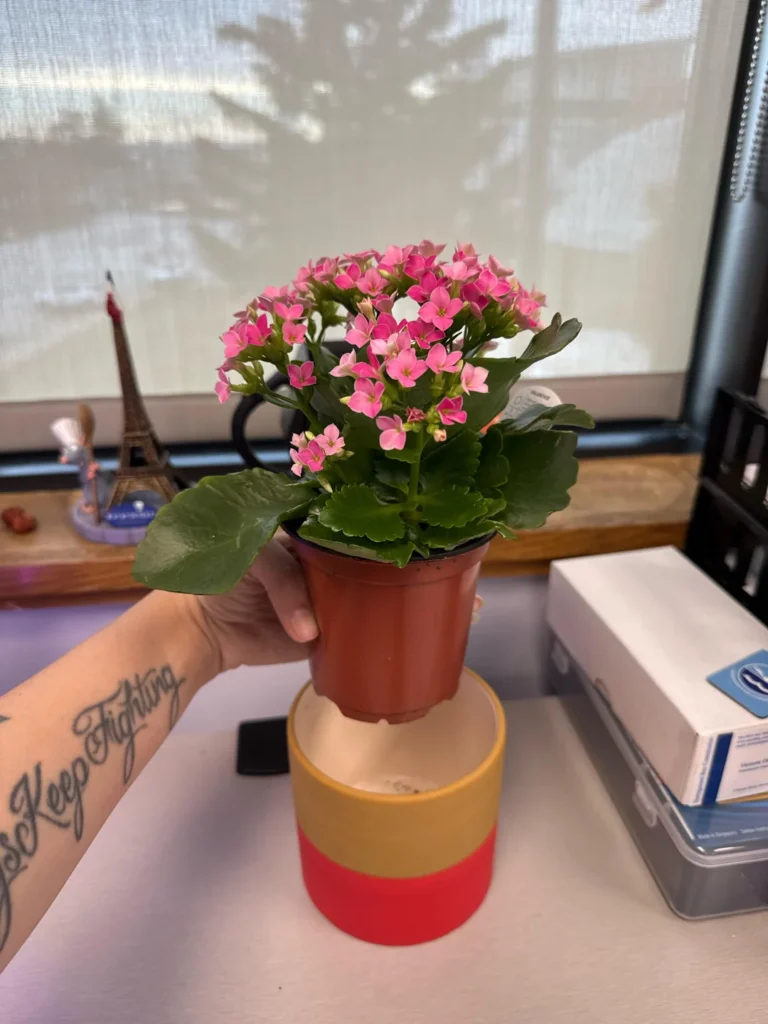
FAQ: Repotting Kalanchoe
How often should I repot my Kalanchoe? Roughly every 12–18 months, or whenever you notice roots outgrowing the pot. Kalanchoe actually does better slightly root-bound than in an oversized pot.
Can I repot Kalanchoe while it’s flowering? It’s best to avoid it. Repotting during bloom can shock the plant and cause flowers to drop early — wait until the blooms fade, or repot beforehand.
What size pot does Kalanchoe need? Choose a pot just 1–2 inches wider than the current one. Going too large can lead to soggy soil and root problems.
Does Kalanchoe need a special soil mix? Yes — a well-draining cactus or succulent soil mix works best. Regular potting soil tends to hold too much moisture for this plant’s roots.
A Little Room to Grow
Repotting isn’t something your Kalanchoe needs often, but doing it at the right time — with the right pot and soil — sets it up for healthier growth and better blooms down the line. Once it’s settled into its new pot, get back to its normal watering and light routine, and you should see it thriving again within a week or two.
Related reading: How to Propagate Kalanchoe, Kalanchoe Watering Guide, Best Soil Mix for Kalanchoe