
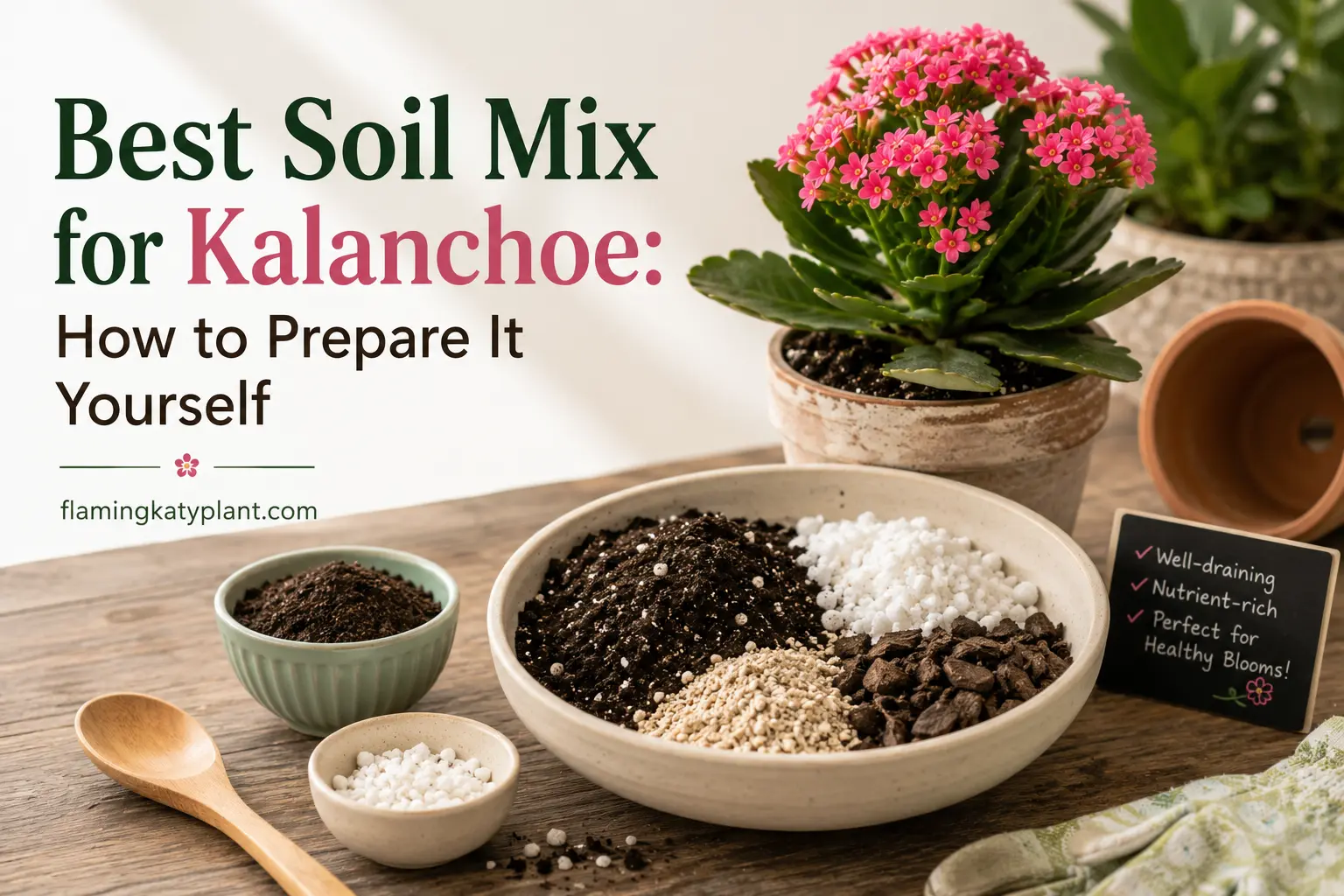
If your Kalanchoe keeps struggling no matter how carefully you water it, the problem might not be your watering can at all — it might be what’s underneath it. Soil is easy to overlook, but for a succulent like Kalanchoe blossfeldiana, it’s just as important as light or water. The wrong mix holds onto moisture for too long, and that’s how root rot starts.
The good news is that getting the soil right isn’t complicated, and you don’t need to buy anything exotic. Here’s exactly what Kalanchoe needs and how to mix it yourself.
What Kind of Soil Does Kalanchoe Need?
Kalanchoe needs soil that does two things well: drains quickly and doesn’t stay soggy, while still holding just enough moisture for the roots to absorb between waterings. In practice, that means a loose, well-aerated, fast-draining mix — similar to what you’d use for cacti or other succulents, rather than a dense, moisture-retentive potting soil.
Regular all-purpose potting soil is usually too heavy on its own. It’s designed to hold water for thirstier plants, which works against Kalanchoe’s succulent roots.
The Ideal Soil Mix Ratio
A simple, reliable mix for Kalanchoe looks like this:
- 60% regular potting soil — for structure and some nutrients
- 30% coarse sand or perlite — for drainage and aeration
- 10% pumice or fine gravel — for extra drainage and to prevent compaction
If you’d rather keep it even simpler, a 2:1 ratio of standard potting soil to perlite works almost as well and is easier to measure by eye.
For anyone who prefers not to mix their own, a pre-made cactus or succulent potting mix from a garden center is a perfectly good shortcut — just check the ingredient list to make sure it includes perlite, sand, or pumice rather than being straight potting soil relabeled.
How to Prepare the Mix Step by Step
- Gather your ingredients. Regular potting soil, coarse sand or perlite, and pumice or fine gravel if you’re using it.
- Measure roughly, not precisely. Exact ratios matter less than the general balance — err on the side of more drainage material rather than less.
- Combine in a large container or tray. Mixing in a wide, shallow container makes it much easier to blend evenly than trying to stir it inside the pot.
- Mix thoroughly. Turn the ingredients over with your hands or a trowel until the texture looks consistent — no clumps of pure soil or pockets of pure sand.
- Do a quick drainage check. Take a handful of the moistened mix and squeeze it gently. It should hold its shape briefly, then crumble apart easily. If it stays compacted like clay, add more perlite or sand.
Signs Your Current Soil Isn’t Right for Kalanchoe
Not sure if your existing soil is the problem? These are common giveaways:
- Water sits on top of the soil for a while before soaking in, or doesn’t drain at all
- The soil stays damp for more than a week after watering
- The pot feels heavy even several days after your last watering
- Leaves are soft, yellowing, or dropping, which often points to soggy roots rather than a watering mistake
- A musty or sour smell coming from the pot
If several of these sound familiar, it’s worth repotting into a fresh, better-draining mix rather than continuing to adjust your watering schedule around a problem soil.
Does Kalanchoe Soil Need Fertilizer Mixed In?
Not necessarily. A small amount of slow-release fertilizer mixed into fresh soil at repotting time can give the plant a gentle boost, but it isn’t required — Kalanchoe is not a heavy feeder, and most of its nutritional needs can be met through light, regular fertilizing during the growing season instead of loading up the soil itself.
Choosing the Right Pot to Match Your Soil
Good soil only works as well as the pot it’s in. A few things to keep in mind alongside your soil mix:
- Always use a pot with drainage holes — even the best-draining soil can’t compensate for a pot that traps water at the bottom.
- Avoid oversized pots. Too much soil around a small root ball stays wet for longer than the roots can use, increasing rot risk.
- Terracotta pots are a nice pairing with Kalanchoe’s soil needs, since the porous material helps excess moisture evaporate a bit faster than plastic or glazed ceramic.
Common Mistakes with Kalanchoe Soil
- Using straight potting soil with no drainage additions. This is the single most common cause of soggy, rot-prone roots.
- Packing the soil down too firmly. Compacted soil restricts airflow to the roots, even if the ingredients are right.
- Skipping drainage material because it “seems fine.” Kalanchoe’s tolerance for wet soil is lower than most people expect — it’s worth erring on the side of more drainage, not less.
- Reusing old, compacted soil at repotting time. Soil breaks down and compacts over time, so refreshing it during a repot is worth the extra few minutes.
FAQ: Kalanchoe Soil
Can I use regular potting soil for Kalanchoe? Not on its own. Regular potting soil holds too much moisture. Mixing in perlite, sand, or a cactus mix brings it closer to what Kalanchoe actually needs.
Is cactus soil good for Kalanchoe? Yes — a store-bought cactus or succulent mix is a reliable, low-effort option and closely matches the drainage Kalanchoe needs.
How do I know if my Kalanchoe’s soil is draining properly? Water should flow through and out of the drainage holes within a few seconds of watering, and the top inch of soil should feel dry again within several days, not weeks.
Do I need to repot Kalanchoe into new soil every year? Not necessarily every year, but refreshing the soil every 12–18 months — typically alongside a repot — helps prevent the compacted, poor-draining soil that builds up over time.
Getting the Foundation Right
Soil isn’t the most exciting part of plant care, but for a succulent like Kalanchoe, it’s often the quiet reason behind both thriving plants and struggling ones. Get the drainage right once, and a lot of the guesswork around watering tends to disappear along with it.
Related reading: How to Repot Kalanchoe, Kalanchoe Watering Guide, How to Propagate Kalanchoe