
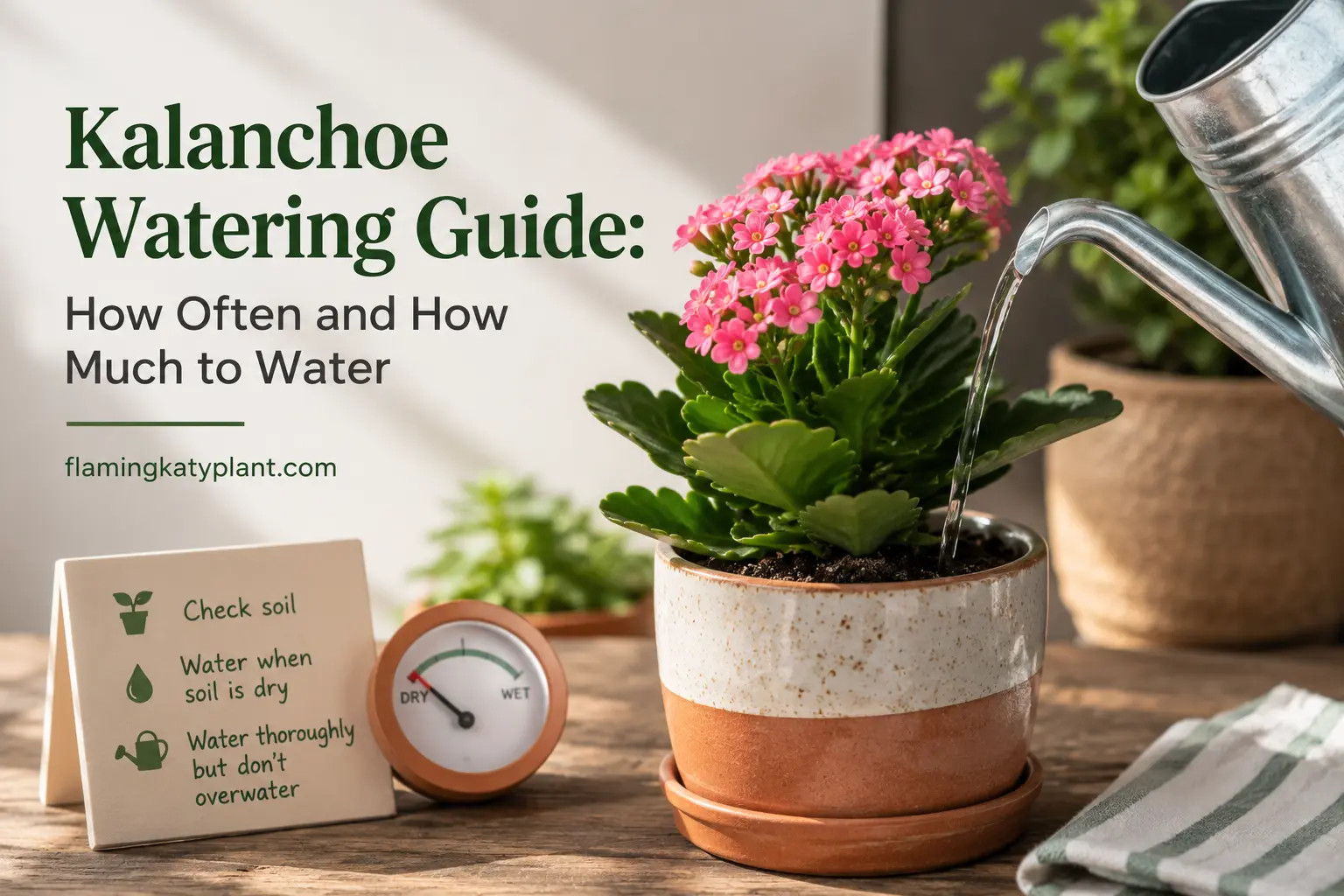
If there’s one thing that determines whether your Kalanchoe thrives or slowly declines, it’s watering — and specifically, overwatering. Flaming Katy is a succulent at heart, which means it stores water in its thick, fleshy leaves and doesn’t need nearly as much attention from a watering can as most other houseplants. Get this one habit right, and the rest of Kalanchoe care becomes fairly forgiving.
Here’s exactly how often to water, how much to give it, and how to read the signs when something’s off.
How Often Should You Water Kalanchoe?
The honest answer is: it depends on your home, not the calendar. Instead of watering on a fixed schedule, water based on how dry the soil actually is.
As a general guideline:
- Every 1–2 weeks during spring and summer, when the plant is actively growing
- Every 2–3 weeks in fall and winter, when growth slows down
- Always check the soil first rather than following the calendar strictly — light, temperature, and pot size all change how fast soil dries out
The simplest rule to remember: let the soil dry out almost completely between waterings. Kalanchoe would rather be slightly underwatered than sit in damp soil.
How to Check If Your Kalanchoe Needs Water
Skip the guesswork with one of these quick checks:
- The finger test. Stick your finger about 1–2 inches into the soil. If it’s still moist, wait a few more days before checking again.
- The weight test. Lift the pot. A well-watered pot feels noticeably heavier than a dry one — once you get familiar with the difference, this becomes the fastest check.
- Leaf feel. Firm, plump leaves mean the plant is hydrated. Leaves that feel soft or slightly wrinkled are a sign it’s time to water.
How Much Water Does Kalanchoe Need?
When you do water, water thoroughly rather than giving little sips here and there.
- Water until it flows freely out of the drainage holes at the bottom of the pot.
- Let the pot sit for a few minutes, then discard any water left in the saucer — Kalanchoe should never sit in standing water.
- Avoid splashing water directly onto the leaves or the center rosette, which can encourage fungal issues, especially in low-light conditions.
A thorough, infrequent watering encourages deeper, healthier roots than frequent light watering, which tends to keep only the top layer of soil moist.
Signs of Overwatering
Overwatering is by far the more common — and more dangerous — mistake with Kalanchoe. Watch for:
- Soft, mushy, or discolored leaves, often turning yellow or translucent
- Leaves dropping even though they still look plump
- A mushy or blackened base near the soil line
- A sour or rotten smell coming from the soil
- Soil that stays wet for more than a week after watering
If you catch these early, hold off on watering completely and let the soil dry out fully. In more advanced cases, you may need to remove the plant from its pot, trim away any mushy roots, and repot into fresh, dry soil.
Signs of Underwatering
Less common, but still worth knowing:
- Leaves that feel thin, wrinkled, or slightly shriveled
- Lower leaves dropping while the rest of the plant still looks otherwise healthy
- Soil that pulls away from the sides of the pot
- Slowed or stalled growth
The fix here is simple and forgiving — Kalanchoe recovers from underwatering far more easily than from overwatering. A good soak usually has it looking plump again within a day or two.
Does Watering Change with the Seasons?
Yes, and this trips up a lot of new plant owners. During Kalanchoe’s active growing season (spring and summer), it uses water faster and can handle slightly more frequent watering. In fall and winter, when growth naturally slows, the plant needs far less — watering on the same schedule year-round is one of the most common causes of winter root rot.
If your home’s heating dries out the air significantly in winter, don’t be tempted to compensate by watering more often — instead, just check the soil a little more frequently and water only when it’s truly dry.
A Few Watering Habits Worth Building
- Always check the soil before watering — never water “just because it’s been a week.”
- Water thoroughly, then let it dry out fully rather than giving small, frequent amounts.
- Use a pot with drainage holes. Without one, even careful watering can lead to waterlogged soil.
- Adjust with the seasons, watering less in fall and winter.
- When in doubt, wait. Kalanchoe tolerates a missed watering far better than an extra one.
FAQ: Watering Kalanchoe
How do I know if I’m overwatering my Kalanchoe? Soft or mushy leaves, a blackened stem base, and soil that stays wet for days are the clearest signs. If you notice these, stop watering and let the soil dry out completely.
Can I water Kalanchoe from the bottom? Yes — bottom watering (setting the pot in a shallow dish of water for 10–15 minutes, then removing it) works well and helps avoid wetting the leaves.
Should I mist my Kalanchoe? No. Misting doesn’t provide meaningful hydration for this plant and can actually encourage fungal issues on the leaves. Water the soil instead.
Why are my Kalanchoe’s leaves wrinkling? Wrinkled, slightly deflated leaves usually mean the plant is underwatered. A thorough watering typically resolves it within a day or two.
Getting the Balance Right
Watering a Kalanchoe well really comes down to one habit: check before you pour. Once you get a feel for how quickly the soil dries out in your space, watering stops being a guessing game — and your plant rewards you with firm, healthy leaves and reliable blooms.
Related reading: How to Repot Kalanchoe, Best Soil Mix for Kalanchoe, How to Propagate Kalanchoe