
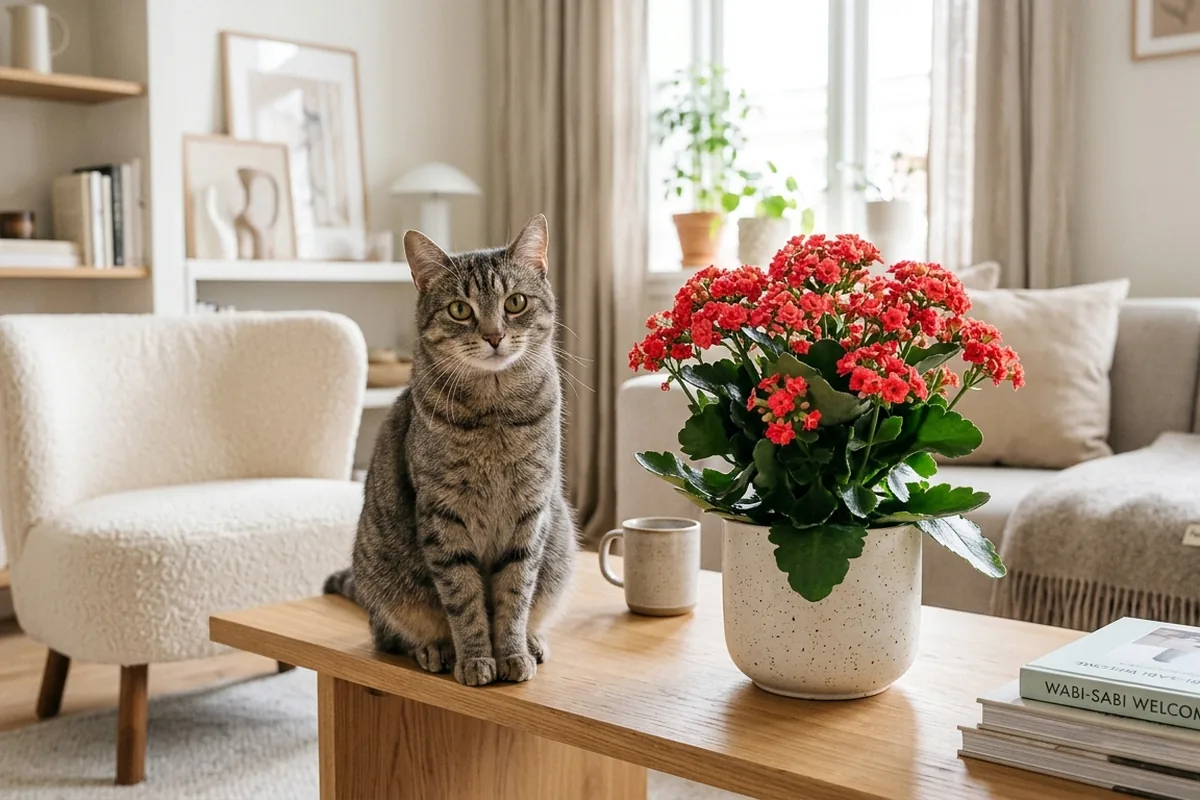
Quick Safety Verdict for Pet Parents
Yes, Flaming Katy (Kalanchoe blossfeldiana) is toxic to cats and dogs. The plant contains naturally occurring cardiac glycosides known as bufadienolides. While most household ingestions trigger mild gastrointestinal distress like vomiting and drooling, swallowing large amounts of the vibrant blooms can cause dangerous changes in heart rate. Keep this plant well out of reach of inquisitive pets.
In This Pet Care Guide:
Why Kalanchoe Plants Are Toxic to Pets
Flaming Katy is one of the most popular flowering succulents in garden centers and supermarkets thanks to its scalloped foliage and long-lasting clusters of neon pink, red, orange, and yellow blooms. However, according to the American Society for the Prevention of Cruelty to Animals (ASPCA), every member of the Kalanchoe genus contains cardiac toxins called bufadienolides.
Bufadienolides interfere with the sodium-potassium pump (Na+/K+-ATPase enzyme) in cellular membranes, especially within cardiac muscle tissue. Interestingly, the highest concentration of these toxic compounds resides in the flower petals, followed by young leaves and stems.
Cats are naturally drawn to the tender texture of succulent leaves, while curious puppies often sample fallen flower buds. Because animals lack the metabolic pathways to rapidly process these cardiac compounds, even a small bite warrants careful observation.
Clinical Symptoms by Severity
The severity of clinical signs depends on your pet’s body weight, the specific part of the plant consumed, and the quantity ingested. Symptoms typically manifest within 2 to 6 hours after exposure.
| Toxicity Level | Typical Signs & Behaviors | Veterinary Urgency |
|---|---|---|
| Mild (Chewed a single leaf) | Hypersalivation (excessive drooling), lip-licking, mild vomiting, loose stools, temporary loss of appetite. | Monitor at home; call your vet clinic or pet poison control for advice. |
| Moderate (Ate multiple leaves or buds) | Persistent vomiting, lethargy, abdominal pain (tucked tummy), mild weakness, watery diarrhea. | Same-day veterinary examination recommended for anti-nausea medication and fluids. |
| Severe (Large flower ingestion) | Arrhythmia (irregular heart rhythm), collapse, dilated pupils, muscle tremors, seizures (rare). | Immediate emergency clinic visit required for ECG monitoring and supportive care. |
Immediate Action: What to Do If Your Pet Ingests a Leaf
Discovering your pet with plant debris in its mouth can be alarming. Staying composed and taking methodical steps ensures the best outcome for your companion.
- Safely Remove Remaining Plant Material: Gently open your pet’s mouth and wipe away any remaining fragments with a damp cloth. Never shove your fingers deep into the throat if the pet is distressed.
- Do NOT Induce Vomiting at Home: Administering hydrogen peroxide or home remedies can cause severe esophageal burns, aspiration pneumonia, or worsen cardiac stress. Inducing emesis must only be done by veterinary professionals.
- Assess the Evidence: Take a photo of the plant and estimate how many leaves or flowers are missing. This information helps your veterinarian determine the potential toxin load.
- Contact Emergency Helplines:
- ASPCA Animal Poison Control Center (APCC): (888) 426-4435 (USA)
- Pet Poison Helpline: (855) 764-7661 (USA/Canada)
- Your local 24-hour emergency veterinary hospital.
Pet-Safe Flowering Houseplant Alternatives
If you love vibrant indoor greenery but share your home with inquisitive dogs or cats, you do not have to settle for plastic plants. Several gorgeous houseplants offer striking colors while being completely non-toxic according to veterinary standards:
- Christmas Cactus (Schlumbergera): Produces dazzling trumpet-shaped blossoms in fuchsia and red without toxic glycosides.
- African Violet (Saintpaulia): Compact, fuzzy foliage with continuous purple, pink, or white flowers safe for curious paws.
- Haworthia (Zebra Plant): Offers the geometric, fleshy appeal of succulents with zero toxicity risks.
- Spider Plant (Chlorophytum comosum): Hardy and safe, though cats often find the bouncy fronds mildly intoxicating like catnip.
For more plant care essentials and diagnosing plant troubles before they spread, check out our guide on proper Kalanchoe watering practices and our complete breakdown of saving a declining Flaming Katy.
Frequently Asked Questions
Will a single bite of Flaming Katy kill a cat?
Fatalities from chewing a single leaf are extraordinarily rare. The bitter sap usually deters pets after one small bite, resulting only in mild oral irritation and brief vomiting. Severe complications usually occur only when small animals ingest substantial quantities of the flowers.
Is touching Flaming Katy dangerous for dogs or cats?
No. Casual physical contact with the leaves or stems does not cause toxicity. The bufadienolide toxins must be ingested and absorbed through the gastrointestinal tract to affect an animal.
Can I keep a Flaming Katy if I have pets?
Yes, provided the plant is positioned in a location that is physically inaccessible to your pets, such as in a hanging macramé planter, inside a closed terrarium cabinet, or in a room with a closed door.