
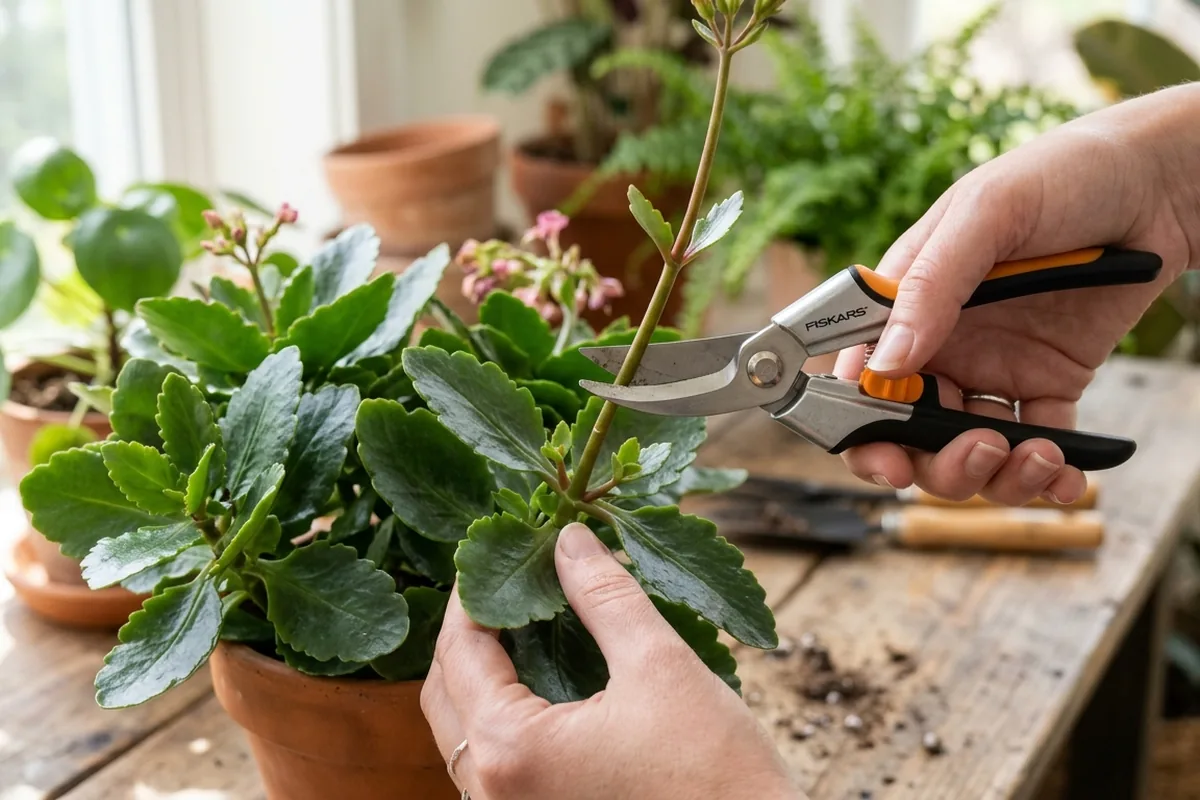
The Quick Pruning Blueprint
Can a stretched, leggy Kalanchoe be fixed? Yes. Once stems stretch out, those individual stems will not shrink back down. The proven solution is a hard prune: cut the elongated stems back by half, just above an active leaf node, and immediately move the pot to brighter light. You can propagate the pruned stem tips in soil to create fresh, compact new plants within 3 weeks.
In This Pruning & Shaping Guide:
Why Flaming Katy Becomes Leggy and Tall
When you purchase a Flaming Katy from a greenhouse, it looks like a tight, compact dome of foliage topped with a carpet of vivid flowers. Fast forward six months in a typical living room, and many growers find their plant has transformed into a floppy, sparse specimen with long, pale stems and widely spaced leaves.
This botanical stretching is known as etiolation. Succulents require intense, bright indirect sunlight to maintain their compact cellular density. In lower light conditions, the plant produces surplus auxin (a plant growth hormone) that triggers rapid cell elongation as the stems literally reach toward the nearest light source.
Additionally, when the dense flush of flowers dies back, the old flower stalks dry out, leaving behind bare woody necks that give the plant an untidy, leggy silhouette.
Essential Tools for Clean Pruning
Pruning a succulent is a minor surgical procedure. Clean cuts heal rapidly with minimal scarring, while crushed stems invite bacterial and fungal infection.
- Bypass Floral Snips: Small, sharp bypass shears provide razor-clean cuts without mashing the juicy succulent stem.
- 70% Isopropyl Alcohol: Wipe blades thoroughly before and between cuts to prevent transferring soil pathogens.
- Ground Cinnamon or Sulfur Powder: A light dusting of organic ground cinnamon over fresh cuts acts as a natural antifungal sealant.
Step-by-Step Pruning Protocol for Maximum Bushiness
Follow this 4-step sequence to restore your Kalanchoe’s lush, mounding shape:
- Deadhead Spent Flower Clusters: Trace the withered flower stalks down to where they emerge from the main foliage. Snip them off cleanly right above the first set of healthy leaves.
- Identify Growth Nodes: Look along the elongated stem for leaf nodes—the tiny horizontal ridges where leaves attach or where dormant bud eyes sit.
- Cut at a 45-Degree Angle: Make your cut roughly 1/4 inch above a healthy leaf pair or node. Cut on a slight angle so moisture does not pool on top of the cut wound. Each cut node will activate two brand-new lateral branches over the next 14 to 21 days.
- Retain Base Foliage: Never strip the plant down to bare, leafless woody trunks all at once. Always leave at least 3 to 4 pairs of green, healthy leaves on the base plant to power photosynthesis while new shoots develop.
How to Turn Stretched Cuttings into Free Plants
Never discard the healthy top sections of the stems you trimmed off. These cuttings propagate effortlessly into full, compact container specimens:
Propagation in 3 Steps:
1. Callus the Cut Ends: Strip the lowest set of leaves from each 3-inch cutting. Set the stems on a paper towel in a dry, shaded room for 48 to 72 hours until the cut end forms a dry, whitish callus.
2. Plant in Well-Draining Mix: Insert the callused end 1 inch deep into a moist blend of 50% succulent soil and 50% coarse perlite or pumice.
3. Provide Bright Warmth: Place in bright indirect light. Do not soak the pot; mist lightly once weekly until tugging gently shows root resistance (usually within 14 to 20 days).
For more detailed propagation tips, explore our complete walkthrough on how to propagate Kalanchoe from leaf and stem cuttings, or learn how to trigger reblooming on your fresh growth.
Preventing Future Etiolation: Light & Care Rules
Pruning fixes the current structure, but light prevents future stretching. Keep these environmental benchmarks in mind:
- Lighting: Minimum 6 to 8 hours of bright, filtered light daily. East or south-facing windowsills are ideal indoors. If natural light is weak during winter, position an inexpensive 15W LED grow light 8 to 12 inches above the canopy.
- Rotation: Give the pot a quarter-turn every time you water. This ensures all sides receive equal solar exposure and stops the plant from leaning.
- Feeding: Avoid high-nitrogen fertilizers. Excess nitrogen promotes rapid, soft, spindly foliage rather than robust, fibrous stems. Use a balanced 10-10-10 or low-nitrogen cactus formula during active growth.
Frequently Asked Questions
When is the best time of year to prune a leggy Flaming Katy?
The optimal time is right after the main winter-spring flowering cycle has ended. Pruning in spring allows the plant to channel its surge of natural summer growth energy into producing dense lateral shoots.
Can I prune the plant while it is still blooming?
It is best to wait until the current bloom cycle has finished. Cutting active flower stems deprives you of the colorful display and causes the plant unnecessary stress while it is expending energy on flowering.
Will cutting the top kill the main plant?
Not at all. Kalanchoe species are vigorous growers. Cutting the apical stem tip actually stimulates dormant auxiliary buds along the stem, resulting in a much bushier, healthier plant.